Vactrim Light
Choosing the right beam angle for a spotlight is crucial for achieving the desired lighting effects. It influences how light spreads and interacts with the environment. When considering how to choose beam angle for spotlight, understanding the space's needs is essential.
Different beam angles serve various purposes. A narrow beam focuses light on specific areas, creating dramatic effects. In contrast, a wider beam spreads light over larger spaces, offering uniform illumination. Evaluating these options requires careful thought.
Reflecting on your lighting needs can be challenging. You may wonder about the impact of the beam angle on your design. This decision shapes the atmosphere of your space. Therefore, it's vital to consider both functionality and aesthetics.
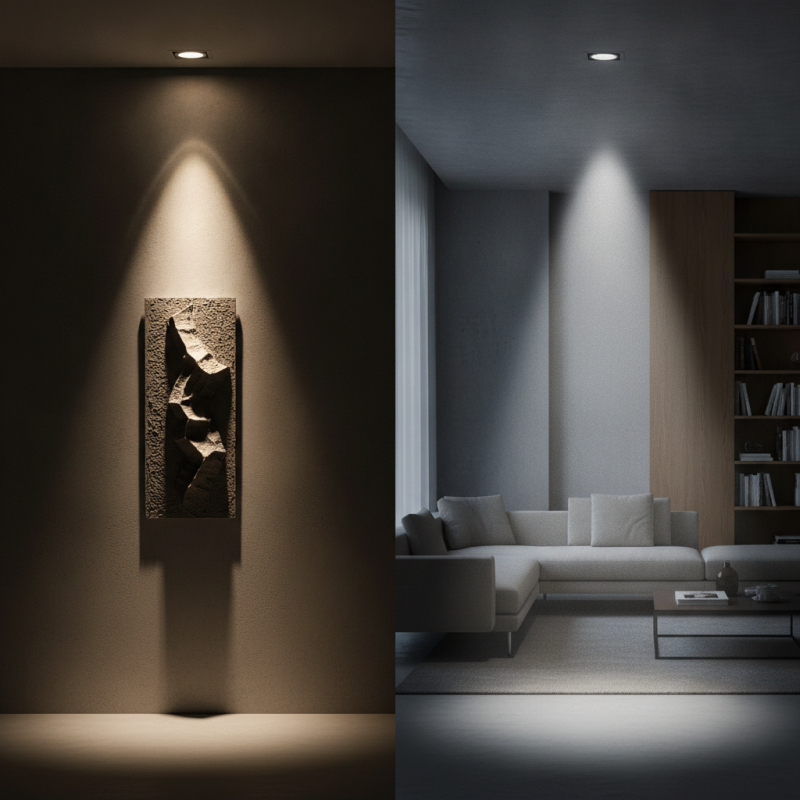
When designing a spotlight, understanding beam angles is crucial. A beam angle determines how light disperses in a space. Common beam angles range from 10° to 120°. Narrow beam angles (10°-30°) focus light on a specific area. In contrast, wider angles (60°-120°) illuminate larger surfaces. Choosing the wrong angle may lead to inadequate lighting or wastage of energy.
Industry studies indicate that appropriate beam angles improve energy efficiency by up to 30%. For example, a report from the Lighting Research Center highlights the impact of angle choice on light output. A poorly chosen beam angle not only affects the aesthetic but also influences visibility. In a restaurant, too narrow a beam can cast unwanted shadows.
Additionally, not all spaces benefit from the same beam angle. A gallery may require directed lighting for artwork. In contrast, a conference room needs more diffuse lighting for comfort. Users should reflect on their specific needs before selecting a beam angle. This consideration can greatly enhance both functionality and ambiance, while ensuring efficiency in light usage.
Choosing the right beam angle for your spotlight is crucial for effective light distribution. The beam angle defines how light disperses from the source. According to the Illuminating Engineering Society, a narrow beam angle (less than 15 degrees) focuses light into a tight spot, ideal for highlighting features. In contrast, a wider beam angle (over 60 degrees) floods an area with light, suitable for ambient illumination.
The optimal beam angle can enhance visibility and aesthetics. In a recent study, effective beam angles improved perceived brightness by up to 30%. However, poor beam selection can lead to uneven lighting and frustrating glare. For example, a narrow beam may wash out details in expansive areas, while a broad beam might leave shadows in specific spots.
Tip: Always consider the purpose of your lighting. For art displays, a narrow beam draws attention without extraneous light. For task areas, a wider beam ensures even illumination.
Understanding how beam angles affect light distribution helps you maximize the impact of your spotlight. It's all about finding a balance. Experimenting with different angles can lead to unexpected results, revealing the nuances in your space that a standard selection might miss.
Choosing the right beam angle for spotlights significantly impacts illumination quality. A narrow beam angle, typically less than 15 degrees, concentrates light in a small area. This can create dramatic effects. However, it can also lead to harsh shadows, making spaces feel stark. In contrast, a wider beam angle of 30 degrees or more offers a softer, more even light distribution. An engineered report from the Lighting Research Center highlights that wider angles produce up to 25% more useful light in larger spaces.
The quality of light affects mood and functionality. A focused beam can enhance artwork but may not serve well in multipurpose areas. Research shows that varying beam angles can alter the perception of room size. For instance, spaces with broader illumination can seem larger. A study in the Journal of Architectural Lighting indicated that proper beam angles can improve a room’s perceived height by up to 15%. Yet, selecting the right angle requires understanding your goals. Using a beam that is too broad in a small room may result in loss of impact and energy waste.
Proper measurement of light is crucial. The wrong beam angle can lead to under- or over-lit areas, making a space uncomfortable. Lighting designers often emphasize the importance of sample testing in real environments. This practice reveals how different angles interact with existing decor. Not all angles work flawlessly with all designs. Experimentation helps in finding the right balance.
Choosing the right beam angle is crucial for various applications. A narrow beam angle, typically between 10 to 30 degrees, focuses light tightly. This makes it ideal for highlighting artwork or architectural features. It enhances details and creates dramatic effects. However, using a narrow beam in a large room can create stark contrasts, making some areas too dim.
In contrast, a wider beam angle—ranging from 40 to 120 degrees—spreads light over a larger area. This is great for general illumination in commercial spaces or outdoor areas. It provides even lighting, which is essential for safety and comfort. Yet, too much diffusion can lead to a bland atmosphere, lacking the warmth of targeted lighting.
Understanding your specific needs is key. Consider where the light is most needed. Experimenting with different angles can reveal unexpected outcomes. Not every situation will yield the desired effect on the first try. A reflective surface can alter how light behaves, affecting your overall design. Finding the right balance will require patience and adjustment.
Choosing the right beam angle for spotlights is crucial. Many people overlook this detail. A common mistake is assuming that wider angles are always better. A broad beam can wash out details in a space.
When illuminating art or architectural features, a narrow beam is often more effective. It directs light precisely where it's needed. However, it's easy to misjudge the size of the area being lit. If the beam is too narrow, it can leave dark patches on walls or floors. This creates visual imbalance.
Another frequent error involves not considering the ceiling height. Higher ceilings may require tighter beam angles to focus light properly. Without this consideration, the spotlight can fall flat. This leads to underwhelming ambiance and effects. People often realize their mistakes only after installation. They wish they had planned better, taking the time to test different beam angles before making a final choice.
: A beam angle defines how light spreads from its source. It's essential for effective spotlight design.
Narrow angles focus light sharply, while wider angles illuminate larger areas. Each has its specific use.
Incorrect angles may cause poor visibility, unwanted shadows, or excessive energy use. This can lead to frustration.
Each space has unique lighting needs. A gallery needs focused light, while a conference room benefits from diffuse lighting.
Suitable beam angles can improve energy efficiency by up to 30%. This helps reduce waste and maximize utility.
Yes, trying different angles can uncover unique effects. Adjustments may sometimes reveal surprising outcomes.
It can create stark contrasts, leaving some areas dimly lit. This might not be appropriate for expansive spaces.
Reflective surfaces can change light distribution. This makes understanding the environment crucial for effective design.
Choosing the right beam angle for a spotlight is crucial for achieving optimal lighting effects in various applications. Understanding beam angles in spotlight design involves recognizing how light distribution impacts overall illumination quality. Different beam angles can create focused or wider spreads of light, which influences the ambiance and visibility of a space. It is essential to consider the specific needs of each application when selecting the beam angle, as common mistakes such as choosing too narrow or too wide angles can lead to unbalanced lighting.
In summary, knowing how to choose beam angle for spotlight involves analyzing the role of beam angle in light distribution and its effects on illumination quality. By aligning the beam angle with the intended use—be it for accent lighting, task lighting, or general ambiance—one can enhance the aesthetics and functionality of any space, avoiding the pitfalls of improper selection.
